
Emotet is back from the summer break - protect yourself now!
Emotet pulls inbound and outbound email traffic and has been on the road for some time. This year there have been more and more cases where Emotet has managed t...
 Chris Wojzechowski Geschäftsführender Gesellschafter
 TL;DR
Emotet returned from a summer hiatus in autumn 2019 with increased activity, hitting targets including Berlin's Supreme Court and Hannover Medical University. The Trojan reads email history to craft convincing reply-chain attacks, attaches macro-laden Office documents, and then downloads secondary payloads like Trickbot and Ryuk ransomware. Protection measures include disabling Office macros, never opening executable attachments (.exe, .bat, .jar, .cmd), and conducting regular employee security awareness training.
Table of Contents (2 sections)
Emotet pulls inbound and outbound email traffic and has been on the road for some time. This year there have been more and more cases where Emotet has managed to spread across various networks. After a summer break the number of reports about attacks is increasing - and the most recent victim is the Berlin Supreme Court.
Targets - that’s how Emotet works!
In the beginning only companies were considered as a goal. The most current cases are for example the Medical University Hannover. According to the clinic spokesman, 170 computers have been quarantined in front of the Hannoversche Allgemeine Zeitung. Happiness in misfortune - no patient data should be affected. Before the summer break, however, the well-known publisher Heise was also affected. The Trojan’s target groups are public authorities, companies and private users. Emotet is able to read its own e-mail history and let it flow off. Subsequently, these are sighted. E-mails are answered - usually first those that are left unanswered in the mailbox. This enables the Trojan to write e-mails to people with whom you are currently in contact. Information is read from e-mails. Subsequently, an automated reply is generated which looks very credible. In addition, there is then an attachment in which the malware is located, which is then executed by activating macros. This activation must take place by human hand and varies in the representation. 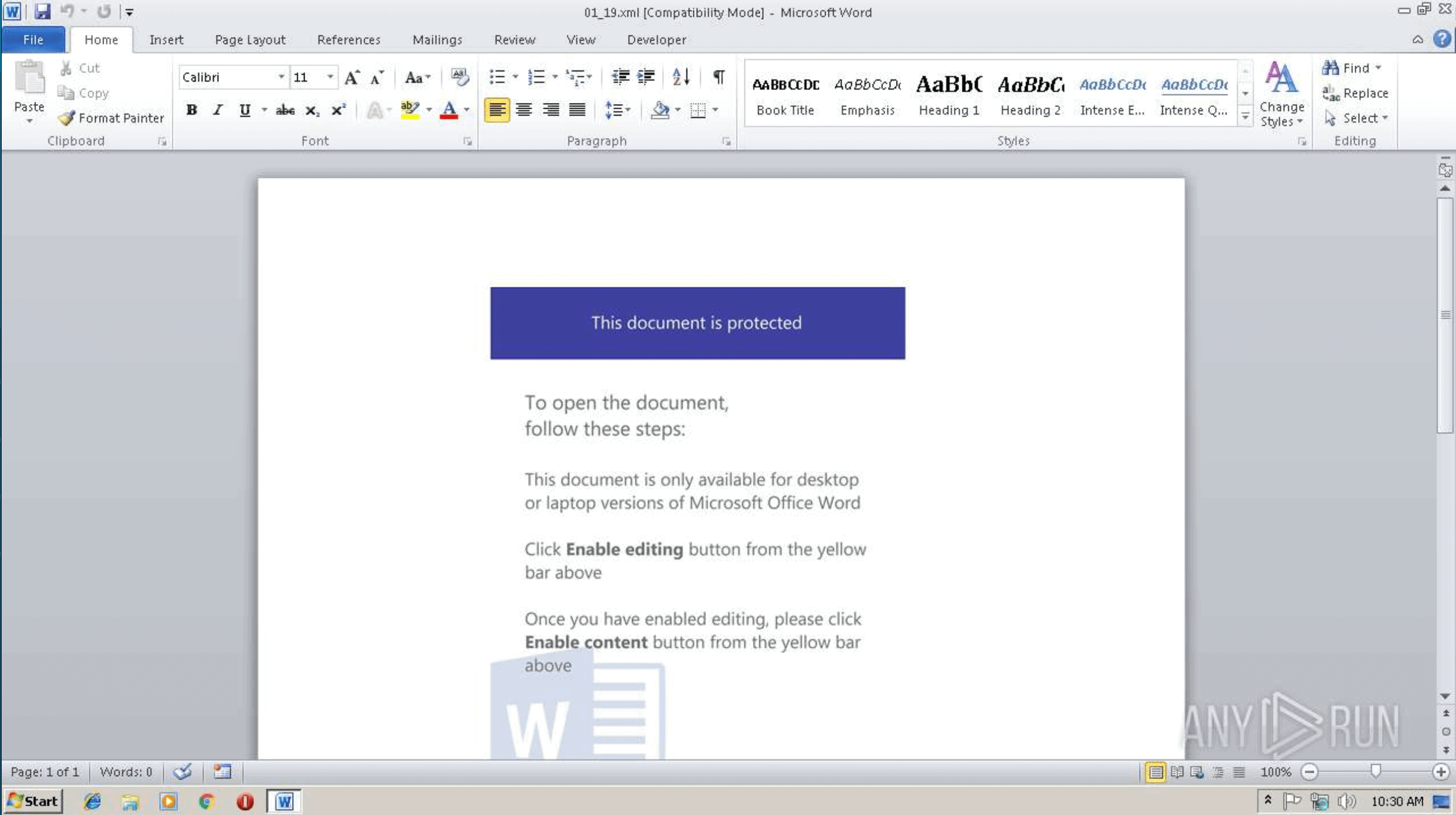
The Emotet Trojan in the wild. Rights must be granted for the Trojan to cause damage. Source: any.run After being spread by e-mail, malware is downloaded by other cybercriminals (initially in Germany Trickbot and the encryption Trojan Ryuk), which can then be executed at the push of a button. This causes the blackmail message to appear on all computers at the same time, paralyzing entire companies.
Protective measures against the Emotet Trojan - you have to know!
We already reported about Emotet in an earlier Blogbeitrag. In summary, Emotet spreads through macros. Accordingly, markos in Office documents should be deactivated. Furthermore, no executable attachments (.exe, .bat, .jar, .cmd) should be opened. You will never receive such attachments from a reputable communication partner in everyday business. One of the most important measures is to train yourself and your employees in social engineering, phishing and general IT security issues. Only if you know what you are dealing with can you protect yourself sufficiently. The BSI also gives detailed tips on how to protect yourself from emotifs and other dangerous e-mails.
Monthly Threat Report
Chris Wojzechowski bewertet einmal im Monat die aktuelle Bedrohungslage aus Sicht eines Informationssicherheitsexperten. Sein 30-köpfiges Team ist näher an realen Cyberbedrohungen dran als kaum jemand sonst — mit konkreten Handlungsempfehlungen, die Sie am nächsten Morgen umsetzen können.
Bestseller-Autor (Wiley-VCH) · M.Sc. Internet-Sicherheit · Bekannt aus Handelsblatt & WamS
Zuletzt behandelt
1x im Monat · Kein Spam · Jederzeit abbestellbar · Datenschutz
Next Step
Our certified security experts will advise you on the topics covered in this article — free and without obligation.
Free · 30 minutes · No obligation

