AI Infrastructure Security
The invisible attack surface of your AI infrastructure.
Most AI security incidents don't happen in the model - they happen in the surrounding infrastructure. Open MLflow instances. Unsecured model registries. Unverified base models. Unprotected training pipelines. We check everything.
- from EUR 12,000
- Fixed-price quote
- 48h (business days)
- Quote turnaround
- 6
- MLOps platforms tested
- 0
- Subcontractors
The Problem
Most AI attacks don't target the model
AI security is often viewed as a purely algorithmic problem - adversarial attacks, prompt injection, jailbreaking. But in practice, the infrastructure surrounding the model is the weakest link. Unsecured MLOps environments open up a broad, real attack surface to adversaries - beyond any ML-specific technique.
Open Jupyter notebooks and MLflow UIs
Many ML teams run experiment tracking interfaces without authentication on the internal network - accessible to any attacker with network access. A single compromised workstation is sufficient.
Model registry without signing and audit trail
Who can promote which model? Has the production model been replaced by a prepared model? Without cryptographic signing and immutable logs this cannot be determined.
Unverified base models from public sources
New model checkpoints are uploaded to Hugging Face daily - without central security review. Compromised models with backdoors are often only discovered after fine-tuning and production deployment.
REAL ATTACK SCENARIO - ML PIPELINE COMPROMISE
- RECON ›
- Nmap scan: port 5000 open - MLflow Tracking Server
- ACCESS ›
- No auth token required - direct UI access
- ENUM ›
- 124 experiments · 18 model artefacts · S3 bucket URL
- UPLOAD ›
- Prepared model uploaded to registry - promoted
- IMPACT ›
- Backdoor model deployed - MITRE ATLAS AML.T0020
MITRE ATLAS - RELEVANT TECHNIQUES
- AML.T0010
- ML Supply Chain Compromise
- AML.T0019
- Publish Poisoned Datasets
- AML.T0020
- Poison Training Data
- AML.T0044
- Full ML Model Access
- AML.T0047
- AI-Enabled Product or Service
What we test
Six layers of AI infrastructure security
From the data pipeline to the serving endpoint - we review the entire ML lifecycle for vulnerabilities.
MLOps Pipeline Security
Security review of the CI/CD infrastructure for ML: training pipelines (Kubeflow, Airflow, GitHub Actions), experiment tracking (MLflow, Weights & Biases), authentication, authorisation, secrets management and network segmentation. Review for pipeline injection possibilities and unauthorised model manipulation.
Kubeflow · MLflow · Airflow
Model Registry Security
Access control (RBAC for read, write, promote), cryptographic signing of model artefacts, immutable audit logs, network access restriction and integrity checks of stored models. Review for privilege escalation paths and unauthorised model substitution.
RBAC · Artifact Signing · Audit Log
AI API Endpoint Security
Security review of inference APIs: authentication and authorisation, rate limiting against model extraction and DoS, input validation, output filtering, query pattern monitoring (extraction detection) and transport security (TLS, mTLS). Review for enumeration, reconnaissance and side-channel attacks.
Rate Limiting · Auth · TLS
Data Pipeline Integrity
Data lineage tracking, integrity checks on training data before processing, validation of data transformations and feature engineering steps. Review for unauthorised modification of training data (data poisoning vectors) in the pipeline.
Data Lineage · Integrity Check · Poisoning
AI Supply Chain Audit
Inventory and verification of all external AI components: pre-trained models (Hugging Face, TF Hub), training frameworks and dependencies (PyTorch, Transformers, LangChain), public datasets and data labelling providers. AI SBOM creation. Backdoor review of selected base models.
AI SBOM · Provenance · Backdoor Check
Container & Cloud Security for AI
Security review of container infrastructure for AI workloads: Docker images for known vulnerabilities, Kubernetes RBAC for ML namespaces, GPU resource isolation, cloud IAM permissions (S3, GCS, Azure Blob for model artefacts) and network policies for training and inference clusters.
Kubernetes · Cloud IAM · Container
MLOps Platforms
All platforms - one assessment
We test all mainstream MLOps platforms and custom pipelines. The test approach is tailored individually to your infrastructure.
Kubeflow
Kubernetes-native
- Pipelines endpoint auth
- KFServing inference auth
- Katib RBAC
- Network segmentation
- Istio configuration
MLflow
Open Source
- Tracking server auth
- Artifact store ACL
- Model registry RBAC
- Artifact signing
- API endpoint exposure
Amazon SageMaker
AWS Cloud
- IAM role permissions
- S3 bucket policies
- Endpoint configuration
- Feature store access
- Studio domain isolation
Google Vertex AI
GCP Cloud
- Service account rights
- GCS bucket permissions
- Endpoint IAM policies
- Matching Engine access
- Workbench isolation
Azure Machine Learning
Azure Cloud
- Managed identity
- Datastore access rights
- Compute network segmentation
- Endpoint auth
- Registry RBAC
Custom Pipelines
Airflow · Prefect · ZenML
- DAG access control
- Secrets management
- Artifact integrity
- Pipeline injection vectors
- Monitoring blind spots
Methodology
How an AI Infrastructure Assessment works
Classical penetration testing craft combined with AI-specific review techniques - per MITRE ATLAS and NIST AI RMF.
2-3 days
Scoping & Infrastructure Inventory
Complete inventory of AI infrastructure: MLOps platforms, training pipelines, serving endpoints, data stores and external dependencies. Threat modelling per MITRE ATLAS - which attacker profiles and tactics are realistic? Creation of the initial AI SBOM: which pre-trained models and datasets are in use?
MITRE ATLAS · AI SBOM
2-3 days
Network & Access Reconnaissance
Network scanning of ML infrastructure: which ports and services are reachable internally/externally? Service banner analysis for MLflow, Jupyter, TensorBoard, KFServing. Cloud IAM enumeration: which roles and permissions are assigned? Identification of overprivileged service accounts and roles.
Nmap · Cloud IAM Review · Service Enum
4-6 days
MLOps Platform Penetration Test
Active penetration test of all identified MLOps components: authentication bypass tests, privilege escalation attempts, pipeline injection tests (can unauthorised training jobs be triggered?), artefact manipulation tests (can models be replaced without authorisation?) and lateral movement analysis within the ML cluster.
Custom Exploits · Pipeline Injection · RBAC Bypass
2-4 days
API Endpoint & Inference Security
Security review of all inference APIs: authentication mechanisms, authorisation granularity, rate limiting effectiveness (simulation of model extraction queries), input validation, output filtering, TLS configuration and monitoring coverage. Estimation of extraction costs: how many queries for an accurate surrogate model?
API Testing · Extraction Sim · TLS Audit
2-4 days
Supply Chain & Artefact Audit
Detailed review of all external AI components: backdoor detection in used base models (Neural Cleanse, STRIP, ABS methods), CVE scan of all ML framework dependencies, trustworthiness assessment of training data sources and review of the model signing chain. Full AI SBOM finalisation.
Neural Cleanse · CVE Scanning · Provenance Audit
2-3 days
Reporting & Remediation Roadmap
Technical report with CVSS scoring, MITRE ATLAS mapping and prioritised remediation roadmap. Compliance mapping: NIST AI RMF (Govern, Map, Measure, Manage), ISO 42001 operational controls and EU AI Act Art. 15 (robustness). AI SBOM deliverable. Management summary and optional closing presentation with the ML team.
NIST AI RMF · ISO 42001 · AI SBOM
Typical total duration: 15-23 days - depending on the number of MLOps platforms and infrastructure complexity.
You receive a binding fixed-price quote within 48 business hours from EUR 12,000.
Frameworks & Standards
One assessment - all compliance evidence
Every finding is mapped to relevant standards and regulations. Your report is ready for audits and certifications.
MITRE ATLAS
The AI-specific ATT&CK framework documents real attack TTPs against AI systems. We structure our attack scenarios along the ATLAS matrix - from reconnaissance to impact.
Supply Chain · Pipeline · Evasion
NIST AI RMF
The NIST AI Risk Management Framework defines operational AI security controls. Our assessment provides evidence for all four core functions: Govern, Map, Measure, Manage.
Incl. Adversarial ML Profile
ISO/IEC 42001
The operational security of AI infrastructure is a core component of ISO 42001 controls. Our assessment delivers audit-ready evidence for certification processes.
38 controls · 9 objectives
EU AI Act - Art. 15
High-risk AI systems must be robust against attacks on infrastructure. Our report maps all findings to Art. 15 and delivers auditable compliance evidence.
High-risk AI · GPAI since Aug. 2025
NIS-2 & NIST
AI infrastructure in critical sectors is subject to NIS-2 security requirements. The assessment report is designed as evidence for supervisory authorities.
Critical infrastructure · Financial sector
AI SBOM Deliverable
Every assessment concludes with a complete AI Software Bill of Materials: inventory of all AI components, provenance data and risk classification of supply chain elements.
Machine-readable · CycloneDX-compatible
Why AWARE7
What sets us apart from other providers
Pure awareness platforms don't test systems. Pure consulting firms are too far removed. AWARE7 combines both: we hack your infrastructure and train your employees: tailored to mid-sized companies, personal, without enterprise overhead.
Research and teaching as our foundation
20 %Around 20% of our revenue comes from research projects for the BSI and the BMBF. Our studies, published at ACM and Springer conferences, analyse millions of websites and tens of thousands of phishing emails. Three of our executives are professors at German universities at the same time.
Digital sovereignty: no compromises
100 %From first contact to final report, your data is stored on our own servers in Germany - no US cloud providers, no third-country transfers. Our AI also runs on our own hardware in Germany - with locally operated open-source models. Client and project data never reach external AI services. All staff are permanently employed, covered by social insurance and bound by uniform legal obligations.
More on digital sovereigntyFixed price within 24h: predictable project timelines
24 hWithin 24 hours you receive a binding fixed-price quote without hourly rate risk. A well-practised team and standardised processes ensure a clear schedule with a defined start and end date.
Your dedicated contact
1:1A personal project manager accompanies you from the first meeting to the retest. You book appointments directly with your contact person and keep the same contact throughout the project.
Peer-reviewed publications
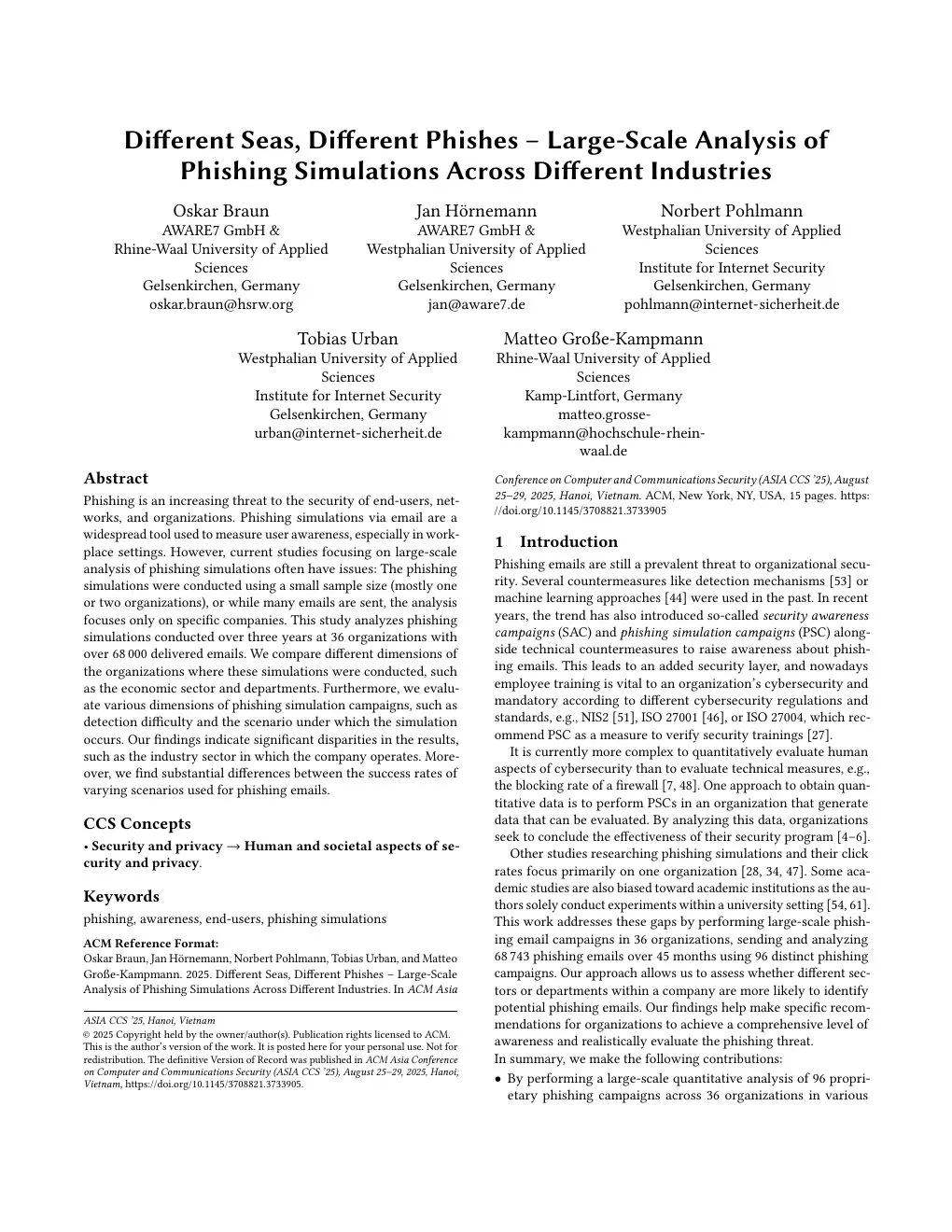
Different Seas, Different Phishes - Large-Scale Analysis of Phishing Simulations
ACM AsiaCCS 2025
Oskar Braun, Jan Hörnemann, Norbert Pohlmann, Matteo Große-Kampmann
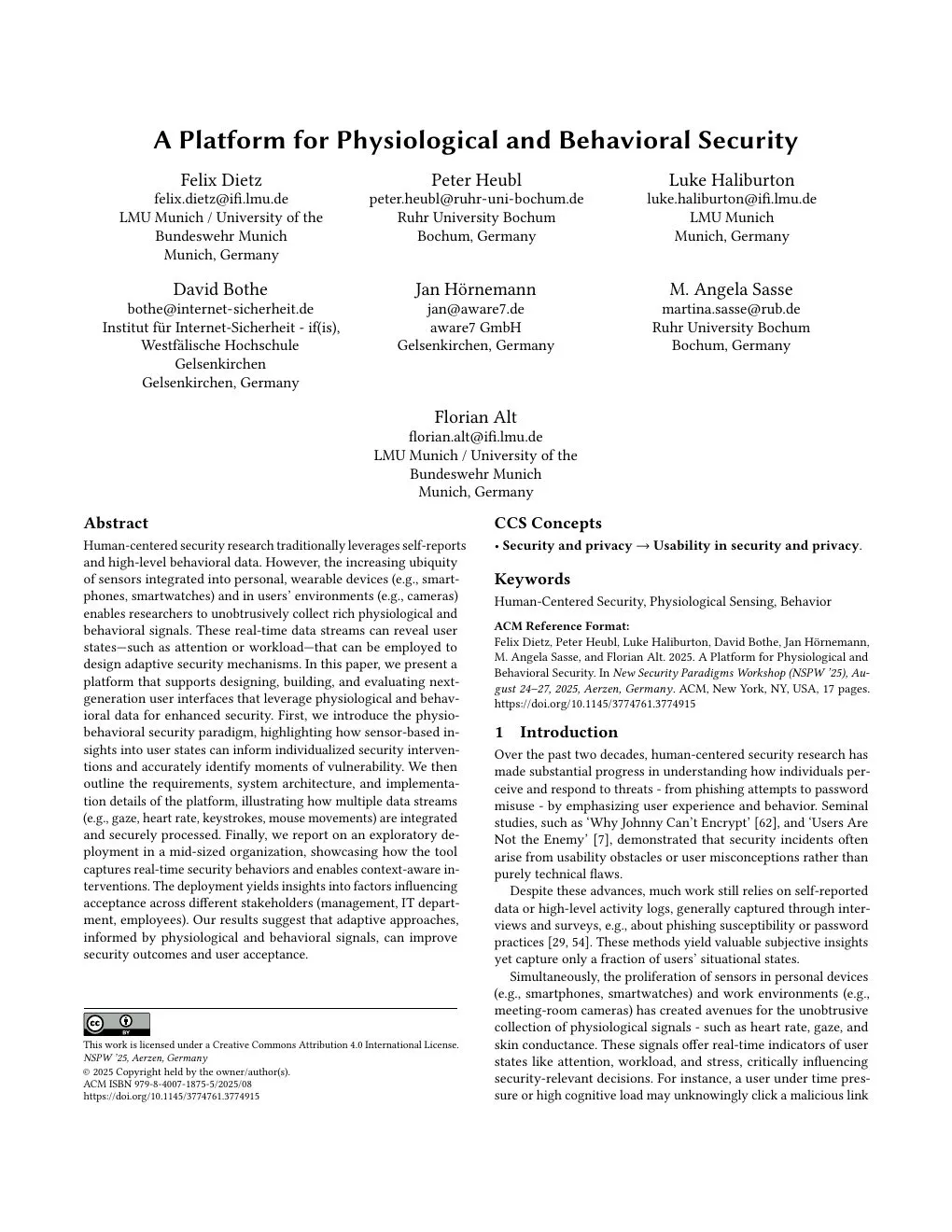
A Platform for Physiological and Behavioral Security
NSPW 2025
Jan Hörnemann
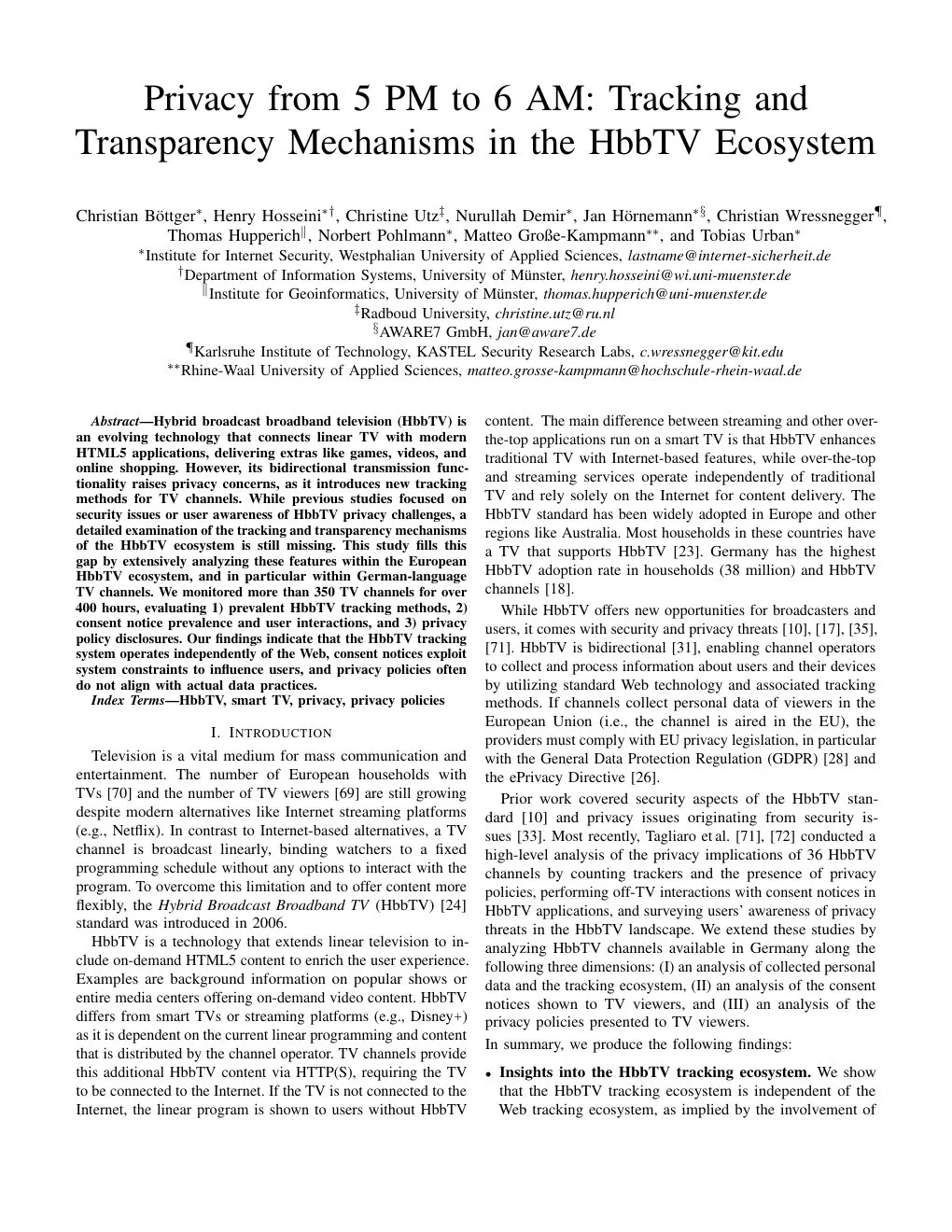
Privacy from 5 PM to 6 AM: Tracking and Transparency in the HbbTV Ecosystem
IEEE/IFIP DSN 2025
Jan Hörnemann, Norbert Pohlmann, Matteo Große-Kampmann
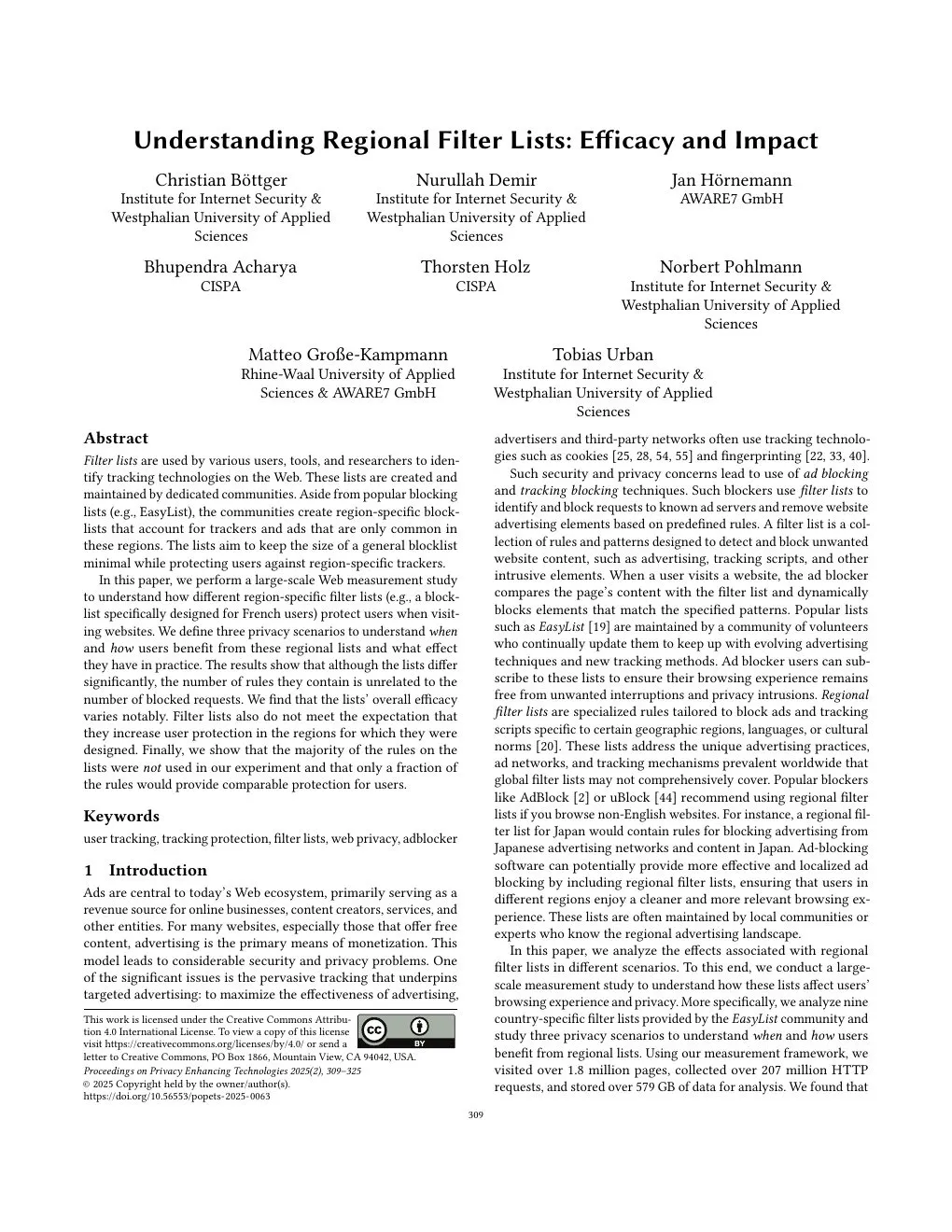
Understanding Regional Filter Lists: Efficacy and Impact
PoPETS 2025
Jan Hörnemann, Norbert Pohlmann, Matteo Große-Kampmann
Who is AWARE7 the right partner for?
Mid-sized companies with 50-2,000 employees
Companies that need real security, without paying for a DAX-corporation provider. Fixed price, clear scope, one point of contact.
IT managers & CISOs
Who have to argue convincingly in-house and need a report in boardroom language for that, not just technical findings.
Regulated industries
Critical infrastructure, healthcare, financial services: NIS-2, ISO 27001, DORA. We know the requirements and deliver evidence that auditors accept.
Frequently asked questions about AI Infrastructure Security
Everything you need to know about MLOps security, AI supply chain and model registry hardening.
What is MLOps Security?
Why is the ML pipeline an attack vector?
What is an AI SBOM and why do I need it?
What is AI Supply Chain Security?
Which MLOps platforms do you test?
What does an AI Infrastructure Assessment cost?
How do I secure my model registry?
How secure is your AI infrastructure really?
Our experts review your MLOps pipelines, model registry, inference APIs and AI supply chain - with fixed-price commitment and AI SBOM deliverable.
Free · 30 minutes · No obligation

